Down in the weeds
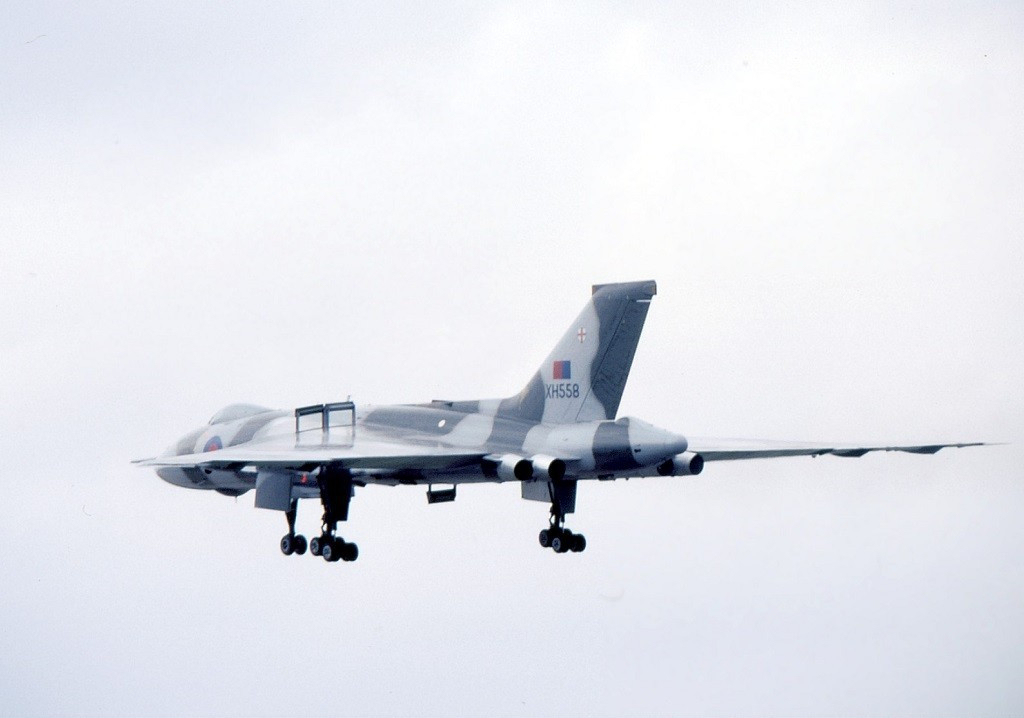
The aeroplane was designed for the stratosphere. The war it trained for, after the early 1960s, was not. Surface-to-air missiles made a steady high-level run look like an appointment. The RAF, like other air forces, went down: use terrain, compress the defender's radar horizon, accept a ride that a high-altitude delta was never going to enjoy. If you learned the Vulcan from a white publicity photograph, you learned the first half of the career. The second half is green and grey, and it rattles.
Paint told the story if you knew the date. Anti-flash white was a high-level nuclear idea — reduce the burn from your own burst. Grey-green uppers arrived because you were now trying not to be seen from above, over a landscape, in daylight that no longer had the courtesy to stay at 50,000 feet. A small thimble on the nose of equipped B.2s held terrain-following radar so crews could hold a clearance height in cloud instead of hoping the hill had moved. H2S did not vanish. It just had less time and more clutter. The navigator's picture got uglier. The ride got worse.
What the airframe thought of this
The structure discovered fatigue it had not been sold with. Low level is weather, gusts, and a wing that was sized for thin air. Inspection became a career. Some aircraft were found wanting; the ones that remained did so because people with clipboards were allowed to be unpopular. Blue Steel, a stand-off missile meant to keep the bomber out of the worst of a SAM belt, sat awkwardly in that new world and left. What remained was a camouflaged tactical bomber that could still, on paper, go nuclear with WE.177, and that would eventually be asked to drop iron bombs on a runway thousands of miles from Lincolnshire.
That last sentence is 1982. It only makes sense if you accept the low-level years as the real second act. The Vulcan that went to Ascension was not the white high-level idea of 1956. It was a tired, well-known, heavily boxed aeroplane whose crews had spent a decade flying it where the air is thick. The howl at an airshow is a descendant of that life, not a contradiction of it. For the sitting that came before the flying, Sitting QRA. For the engines that had to work in both regimes, Olympus.