Cover / The aircraft / Olympus
Olympus: the engine that became a rumour
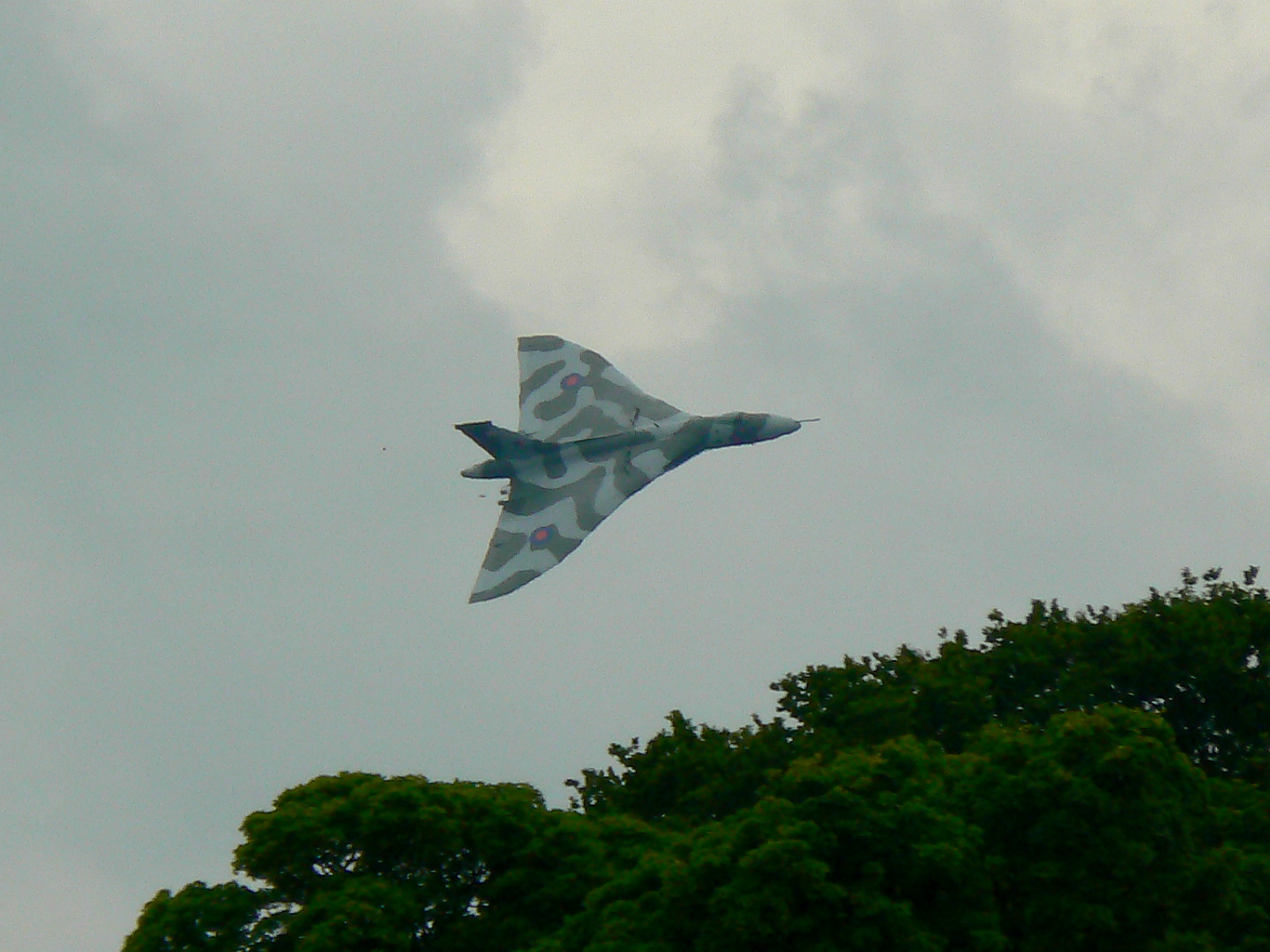
Ask a British airshow crowd what they remember and they will not quote a ceiling. They will try to imitate a sound. The Olympus turbojet — later a Bristol Siddeley product, then a Rolls-Royce one — is the Vulcan's other famous shape: four of them, hidden in the wing, thirsty, and on the approach capable of a rising howl that people still argue about in pub car parks. It is not a siren bolted on for the crowd. It is compressor and intake behaviour in a particular corner of the envelope, loud enough to feel in your ribs.
Display pilots of XH558 used it because it was there, not because a marketing department asked. Service crews lived with the same engines on mornings when nobody was filming. They started them, nursed them, and wrote up the defects. The romance is a Saturday product. The engine was a weekday one.
A ladder of marks
Early B.1s ran modest Olympus 101, 102 and 104-series engines, enough for the high-level job as first drawn. The B.2's 201s, and later the 20,000 lbf-class 301s on some aircraft, are why the type could lift Blue Steel and still talk about height. More thrust meant more heat, more fuel, and intakes that had to grow. From XH557 the mouths deepened. The airframe and the engine raised each other. You cannot tell the story of one without the other, which is why this page and the airframe keep pointing at the same photographs.
The Olympus family did not stop at bombers. A later, unrelated-feeling career in Concorde is a pub fact that is technically true and emotionally unhelpful. The Vulcan's engines were turbojets in a 1950s wing. They were not the Olympus 593. If someone tells you XH558 had Concordes in it, buy them a pint and change the subject.
Why the last flyer stopped
Keeping four 1960s turbojets civil-airworthy was what finally grounded XH558. Spares, remaining life, and money — not a lack of volunteers, and not a sudden discovery that the howl had become unfashionable. A Trust can raise affection. It cannot outrun metallurgy or a vanished military supply chain. That is why the taxi aircraft matter. XM655 and XL426 will, on advertised days, run Olympus engines on the ground. You will not get the approach. You will get the compressor, the heat, and the smell. That is still the argument, minus the altitude.
We wrote a longer note on the noise itself: The howl. If you are standing under a wing this Saturday, the useful identification is simpler than a mark number. Four hidden jets. Intakes like caves. A sound that is not a Merlin and not a fan. That is the Olympus, and it is why the silhouette has a voice.