
Cover / Journal / The howl
The howl
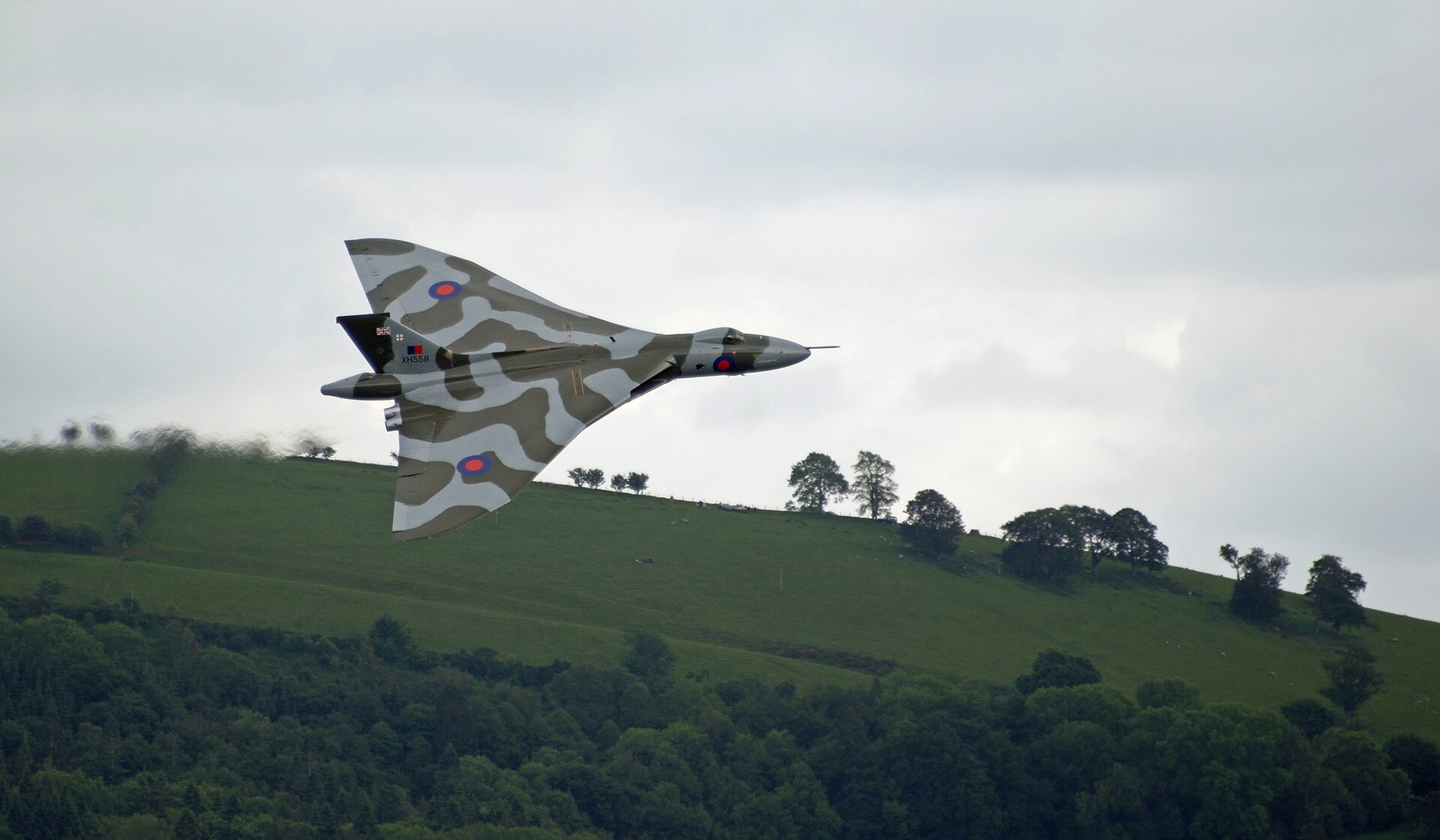
Every type collects a cliche. The Spitfire has the Merlin. The Lightning has a bang. The Vulcan has a note that is not quite an engine note and not quite a whistle: a rising complaint on the approach that made children grab a sleeve. We have heard it described as a siren, a wolf, and a kettle boiling in a hangar. None of those is accurate. All of them are closer than a thrust figure on a plaque.
The sound is a by-product, not a fitting. Four Olympus turbojets sit in the wing roots behind intakes that were drawn for high altitude and then asked to work at display speeds, high power, and a nose-up attitude that still startles people on film. Air going into those mouths, and compressors working in a corner of the envelope they were not photographed for, produces a howl. Display crews of XH558 did not invent it. They allowed it. Once the crowd had heard it, they would not accept a quiet approach. The howl became the product.
What you were actually hearing
Ask ten enthusiasts and you will get eleven mechanisms. Some talk about intake buzz, some about a compressor note, some about the geometry of the mouths as the aircraft comes over the hedge. The honest journal answer is that it was all of those things in combination, and that nobody bolted a siren under the bomb bay for Farnborough. Service crews lived with the same engines on mornings when nobody was filming. They did not call it theatre. They called it an aeroplane.
Recordings are always a little too clean. A phone at an airshow compresses the low end, the thing that sat in your ribs, and leaves the whistle. If you grew up on YouTube you may think the howl is a treble event. It was not. It was a chest event with a treble on top. That is why people who were there get bored of the clips, and why people who were not there think the clips are enough.
After the last landing
XH558 stopped flying in October 2015. The howl did not become extinct that afternoon, but it became rare in the only way that counts: you cannot book it. Taxi days at Doncaster, Wellesbourne and Southend will give you Olympus compressors at high power on the ground. That is a different noise in a different place, and it is still a better education than a comment thread. You will smell oil. You will feel the runway. You will not get the approach.
Keeping the engines civil-airworthy was what ended the flying, not a shortage of people who wanted to hear it. Spares, life, and the cost of being honest about a 1960s turbojet without a military supply chain. We wrote the engine history, as opposed to the folklore, in Olympus. If you only have time for one sentence: the howl was an intake and a compressor having an argument, and the argument was loud enough to become the aeroplane's name in public.