One crater
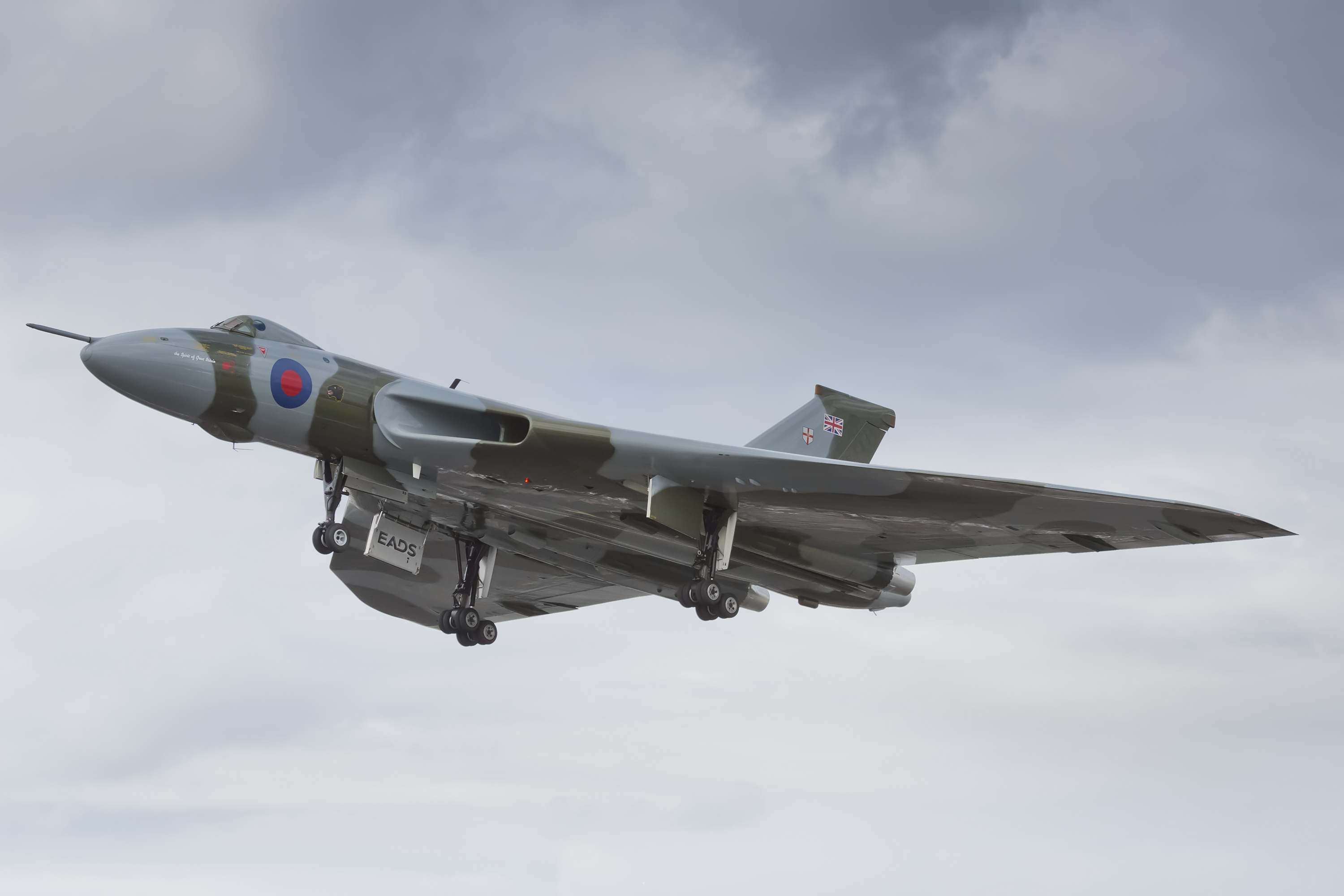
On the night that became 1 May 1982, a Vulcan of No. 44 Squadron dropped twenty-one 1,000 lb bombs at Port Stanley airfield. One cratered the runway. The rest fell alongside. If you only remember the raid as a perfect dart, you have been watching a documentary with the difficulty edited out. The bomber was already close to retirement. That is not a footnote. It is the joke and the achievement at once.
The primary aircraft went unserviceable. XM607, Flight Lieutenant Martin Withers and crew, took the job. They had launched from Wideawake on Ascension, a place that exists in the war's geography more than in anyone's holiday plans. Navigation over water used the same family of boxes the V-Force had always used: radar mapping, a plot, astro, radio aids. Finding a short runway on a dark island after that distance is a skill, not a miracle. The stick was aimed to cut the runway. One bomb did. The others walked beside it. That is still a result. Stanley could not be treated as a safe fast-jet strip, and the political message — that the islands were not out of reach of the RAF — did not need twenty-one craters to land.
What the night was, and what it was not
Withers received the DFC. Later Black Buck nights tried more bombing and, separately, Shrike attacks on Argentine radars. Some nights the tanker plan simply broke and the bomber came home with the bombs still in the bay. Scarcity is part of why we still talk about it. A nuclear bomber, flown by men who had spent their careers training for a different war, was asked to do a conventional job from an island most Britons could not find on a map, using a tanker force that was itself a relic of the Valiant's death. If you want the unglamorous half, it is not the crater. It is how the fuel worked.
XM607 sits at Waddington now, a gate guardian on a working station, which means you look from a distance. XM598 at Cosford and XM597 at East Fortune are the museum versions of the same story: airframes that were in the force when the phone rang. We are not going to pretend a single hole in a runway won a war. We are going to notice that a type built for Moscow was still, in 1982, the only thing Britain had that could do that night. That is either impressive or embarrassing, depending on the decade you are sitting in. Both readings can be true.
Also in this department
How the fuel worked · Spirit of Great Britain · Valiant, Victor, Vulcan